

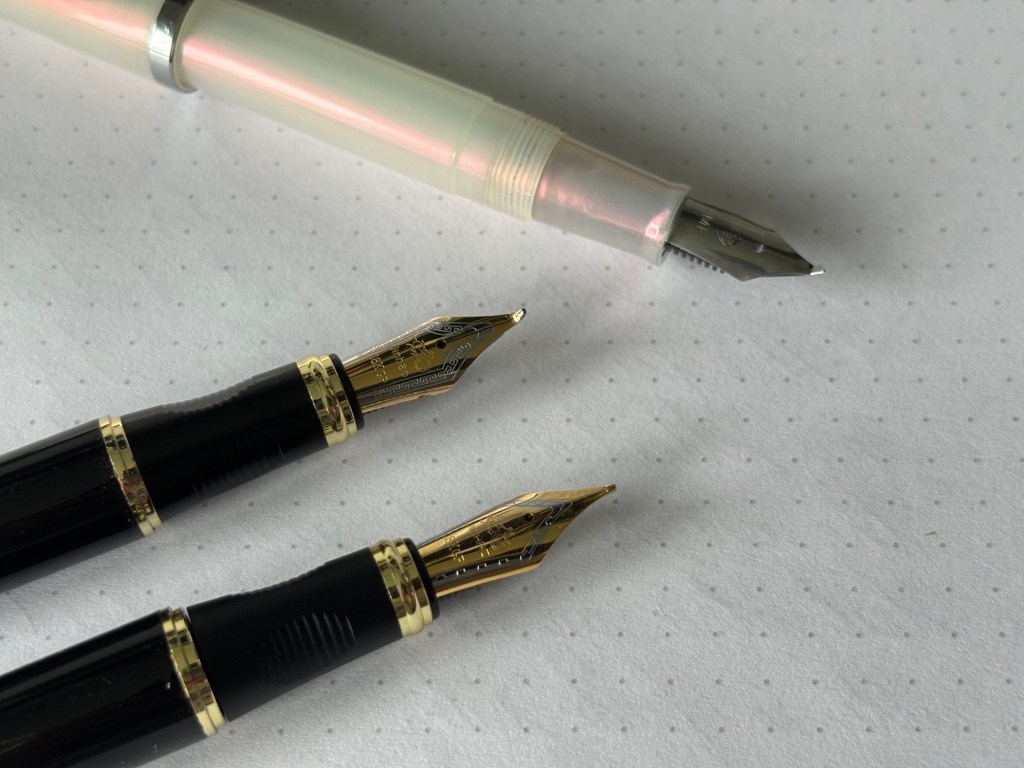
It’s time again for another pen swap. This time I’m replacing my Sailor Profit Jr. fountain pen with the Duke 551, so one fude nib replaces the other, kinda interesting.
I bought the Sailor Profit Jr. at a local pen shop in Ghent, Timmermans. This pen was in their shop window and my attention was drawn to it because on the one hand it seemed to be a cheap pen, but also on the other hand the pen is equipped with a fude nib.
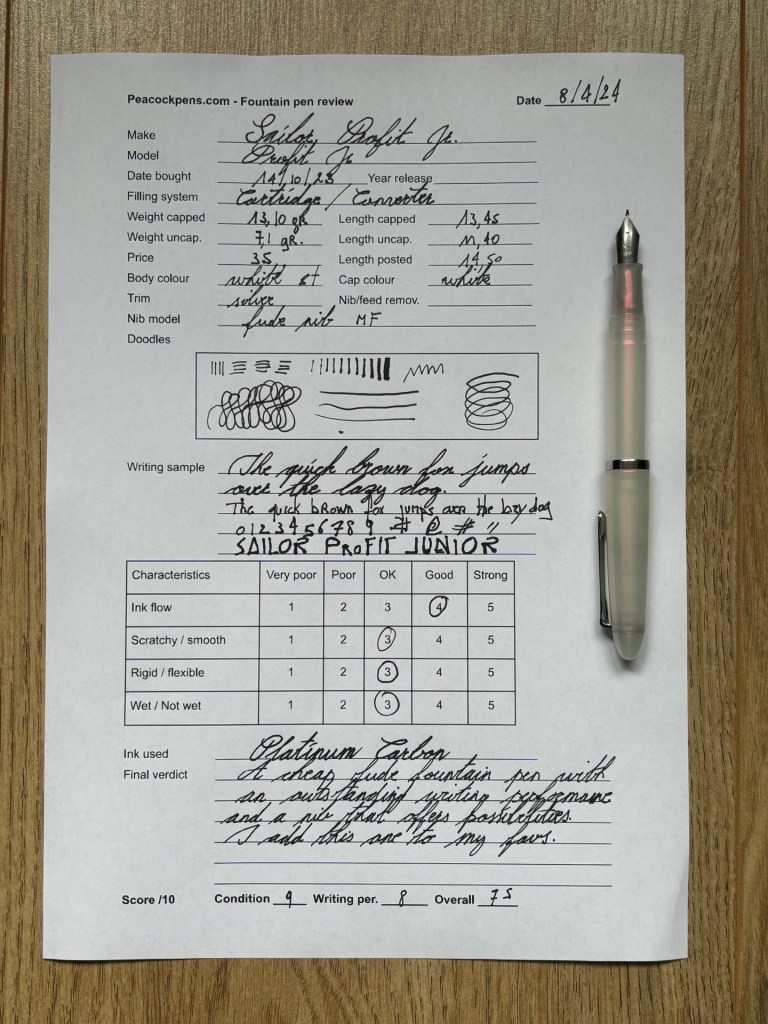
I paid 35 euros for this. The pen is sold in a cardboard box and includes a converter and a 10 ml ink bottle. The ink is either Kitsune Biyori, Byakuya or Kyokkou. I’m not going to go into more detail about this ink because this ink is way too light in color and my intention is to use black waterresistant ink with it.

Since I sketch quite a lot and I have noticed that many artists use a fude nib, my interest in this nib has increased. So I mainly used the Sailor for sketching. The ink I used is the Platinum Carbon. I can already tell you that this pen has surprised me positively in many ways.
The Sailor Profit jr. is one of the cheapest pens in the Sailor range. It’s a cartridge/converter pen with a body made entirely of plastic, in my case a white body.
The pen has a twist cap that needs two turns for opening. At the opening side of the cap is a silver trim with engraved ‘SAILOR – MADE IN JAPAN’. The pen has a metal clip. There is no inner cap. Somehow the cap seals very good because I never had any issues with the ink drying out in the pen. You can opt to remove the clip just by unscrewing the top op the cap. This pen is perhaps one of the few pens I recommend to use the cap in a posted way. The pen is very small and light (13,1 gr. capped and 7,1 gr. uncapped) and by posting the cap euh. you don’t loose any weight :-). Be careful when you close the cap because the fude nib tends to scratch the inside of the cap.


The cigar shaped barrel is light transparent in such way you can see the shadows of the underlying internal parts. The barrel is screwed onto the section and needs 5,25 turns to release it. The grip is made out of the same material of the cap and barrel. The rounded grip has no ergonomic features for holding it. For me the grip felt just fine.

The Sailor Profit has a fude nib on which is engraved the Sailor brand logo and the letters MF. A fude nib is a nib that has the point bent upwards at a certain angle. The fude nibs offer a wide range of line width depending on the angle at which you hold the pen. The fude nib is perhaps most used for writing Japanese because it simulates somehow the strokes of a brush.
My first ever stupid thing I did when I was a newbie with fountain pens has to do with a fude nib. When I just started collection fountain pens, I was not aware of ‘fude’ nibs. When I ordered a Jinhao X450, on arrival I noticed the nib was bent although I was certain I ordered a ‘normal’ nib. So stupid me, I thought the pen had fallen and the nib was damaged. I mailed the seller that I was nog happy with the damaged pen and he sent me a new one with a regular nib and I could keep the damaged one…It’s really embarrassing to not know about fude nibs until a long time later, so the Jinhao 450 is actually my very first fude fountain pen. That’s the nice thing about a fountain pen collection: the stories of how it came about. So my apologies to AliExpress for my ignorance and a big thumbs up for their generosity and patience in keeping me happy.
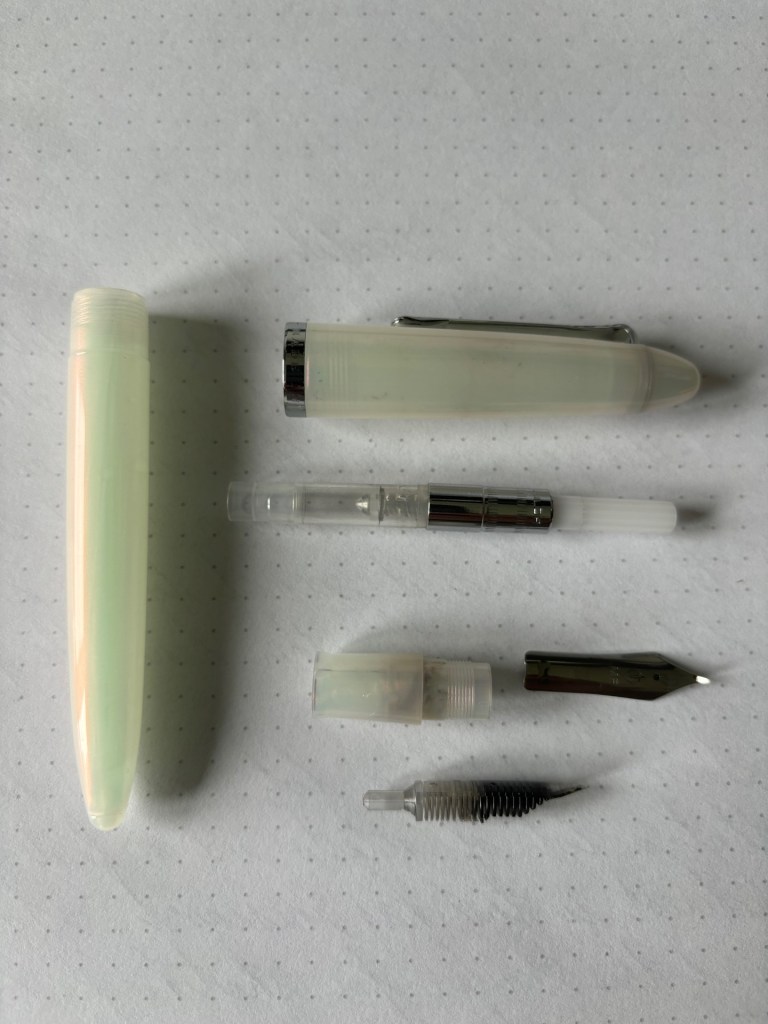
For cleaning the pen you can remove the nib and feed. It’s friction fit, but with a little force you can pull it out of the section. After using waterresistant (Platinum Carbon ink) ink it’s hard to get it back 100% clean. The worst part is the transparent feed that has now become more kinda smokey grey. But I think if the feed was black you never noticed this. I guess I managed to have it cleaned for about 90%. The included converter can also be disassembled, which makes cleaning it very easy. Almost nothing residue remained in the converter. As I already mentioned in my post about Lamy Vista, it’s better to use dedicated pens with waterresistant ink.
Overall, I can conclude that I am a fan of this pen. This pen is very easy to handle and the nib offers endless possibilities. An ideal pen for those who want to use it for sketching or calligraphy. Whether you really benefit from it in case of European handwriting, will depend a lot of the way you write. If you write in Japanese, this pen obviously has more to offer. I take it to heart that a converter and ink bottle are included.
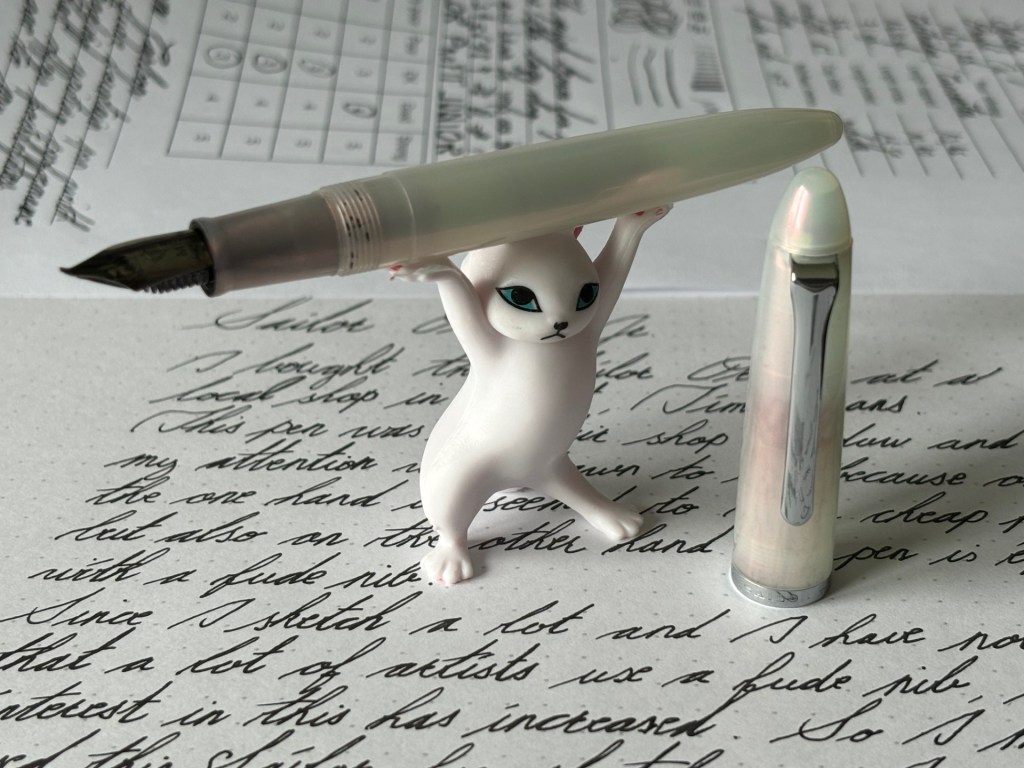
If you were to ask me if I would buy this pen again, I would answer, without a doubt, with a Yes.
What do you think of this Sailor Profit Jr.?

Duke 551
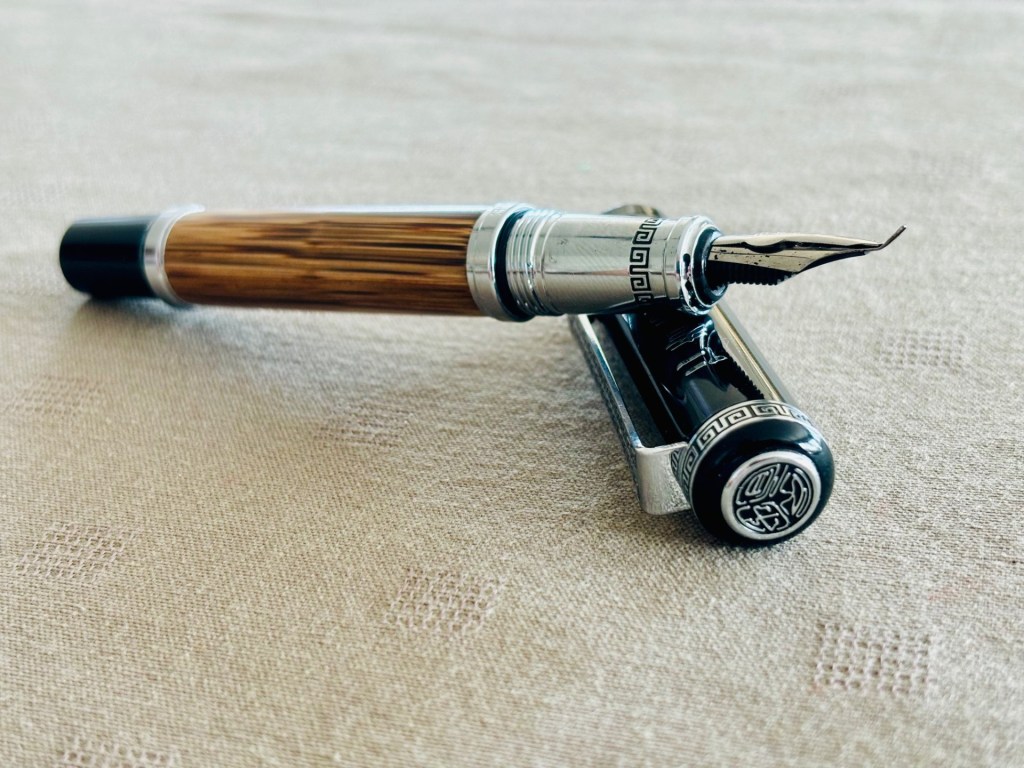
Now that the Sailor Profit Jr. is being put aside for a while, I currently run out of pens filled with permanent ink. Hence the strategic choice to prepare the DUKE 551. This pen enjoys a lot of positive reviews and is often used for sketching. In the coming months it will be actively tested, I am curious about this heavyweight.


 Peacock pens
Leave a reply to Laura @ Inky Imaginings Cancel reply