
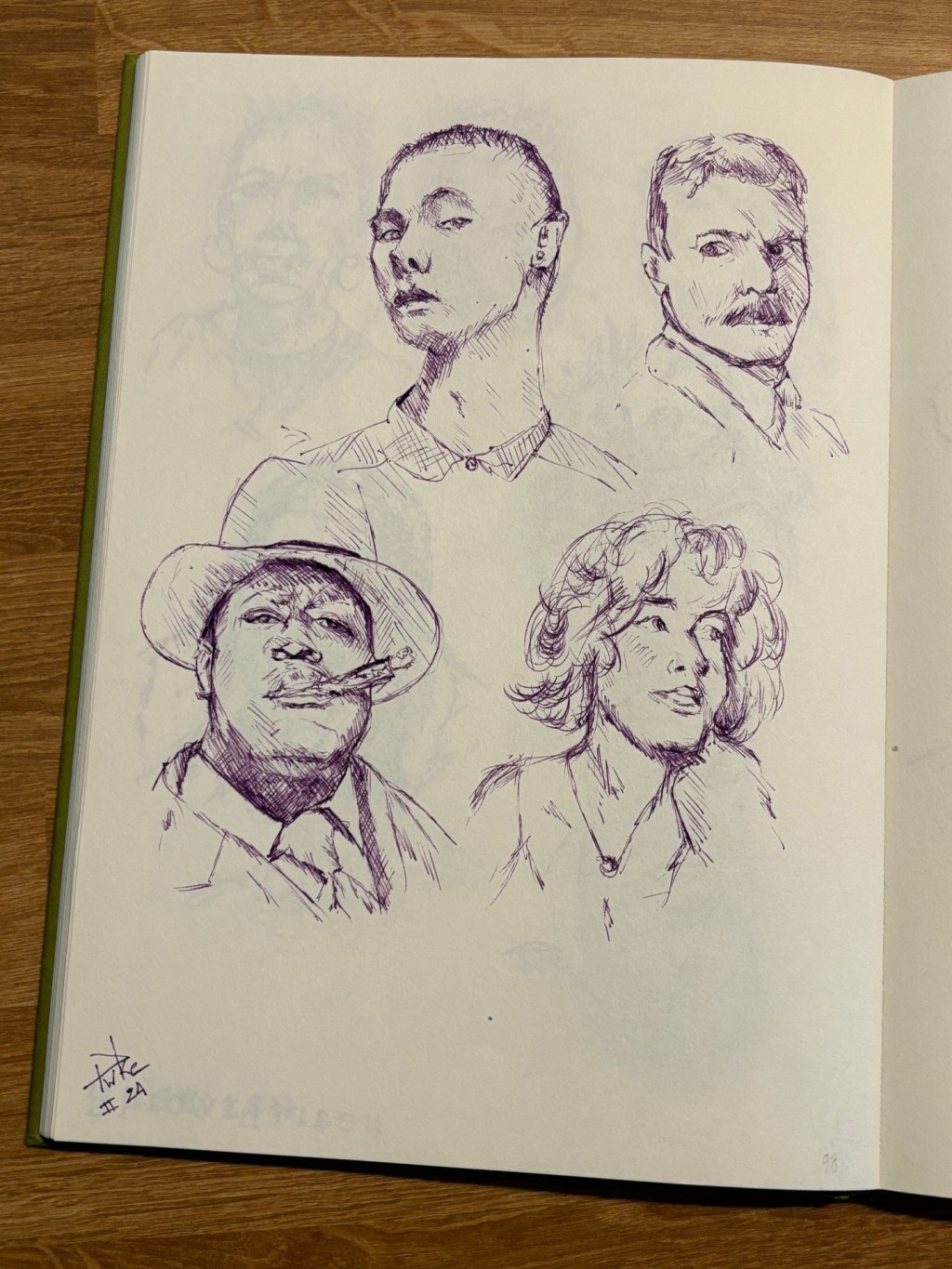
My drawing challenge of drawing 1000 faces or portraits is still going on, so it’s about time to give you an update.
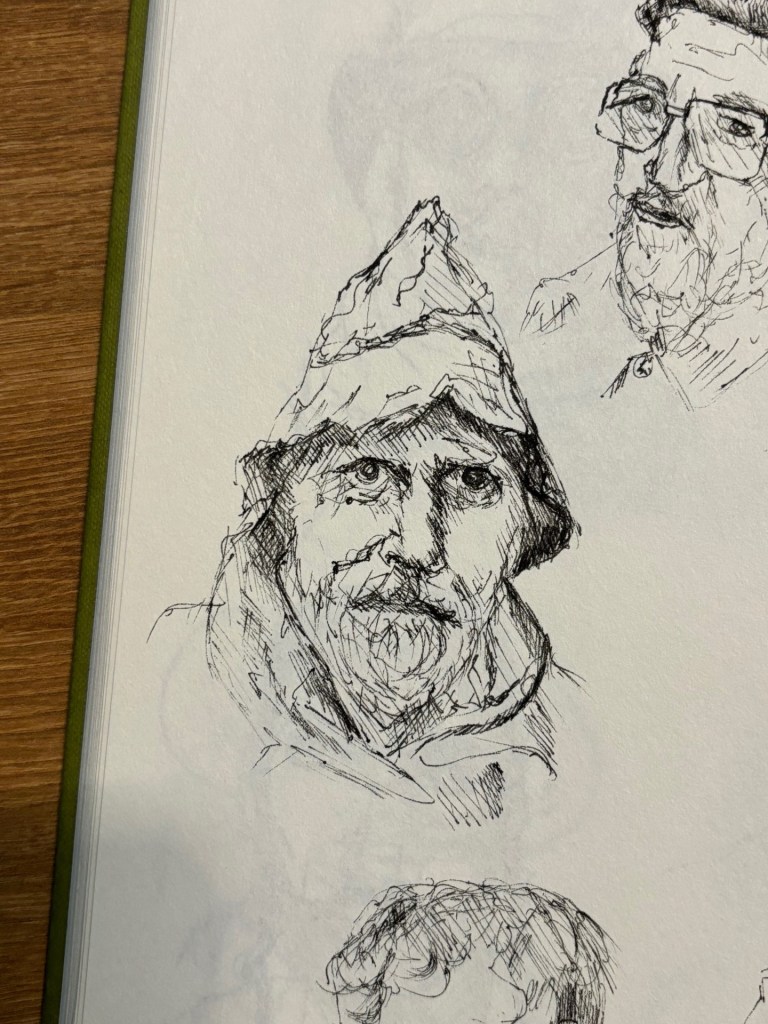
I’m not doing this challenge just to reach my goal of 1000 drawings, but it’s an incentive to encourage me to draw on a daily basis. It is always said that by practicing one gets better, not perfect. So in the learning process, which I am undergoing now, I have to be critical to myself that not everything works out well and that mistakes are made. Making mistakes is an essential part.

The learning process actually consists of looking for mistakes and how they were made. Once I know the reason, I can correct and check again to see if the results improve. Now, this process is difficult and takes its time. This process to improve quality reminds me of the quality circle from Deming that I was once taught: plan – do – check and act. So I think this process applies not only to companies but also to anyone who wants any kind of improvement. So also for me as far as sketches are concerned.
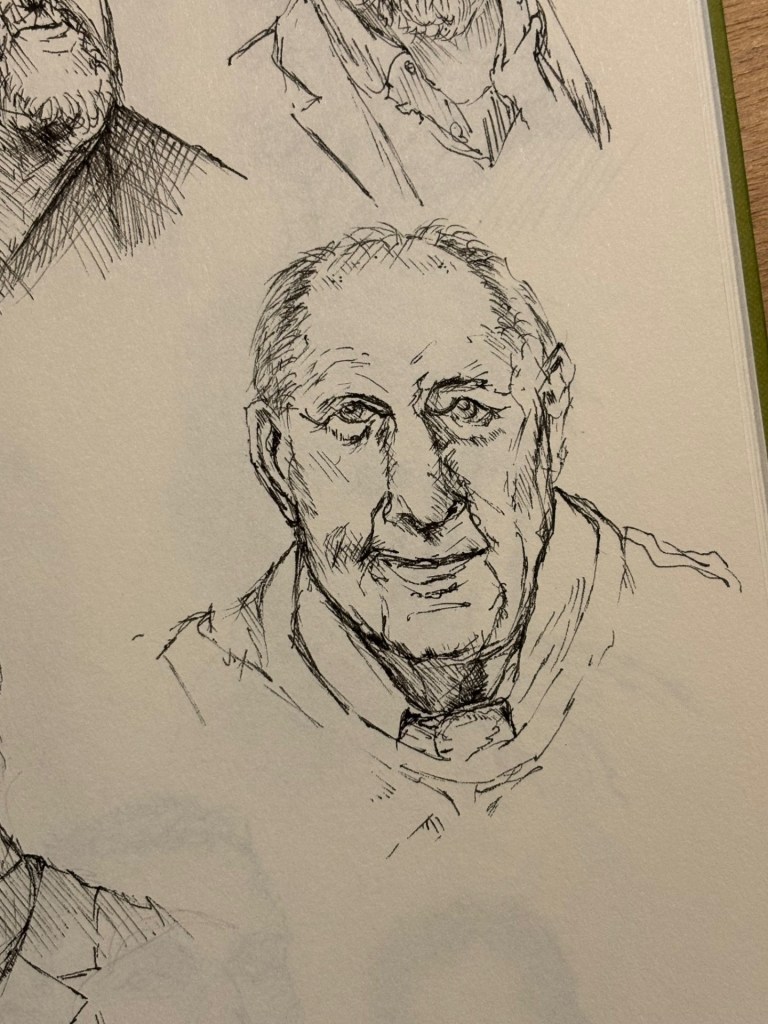
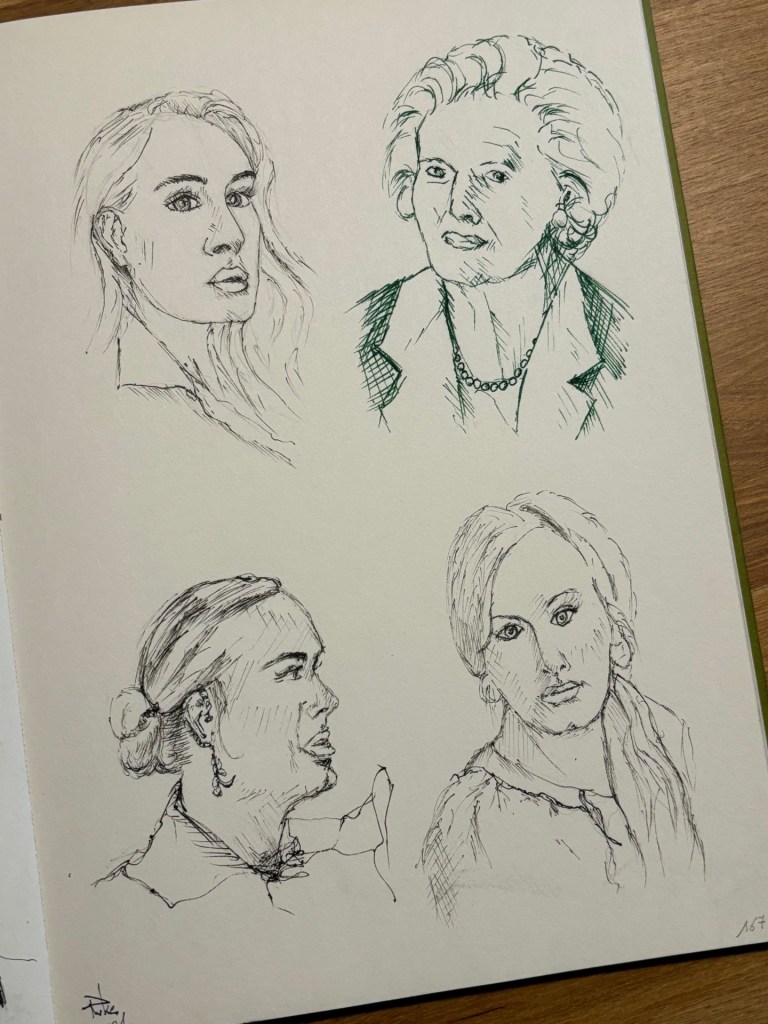
In the last series of drawings, I tried to draw portraits that I think are easy to recognize. Until now, I was actually happy that the portrait looked like a human being. This is a step further. And I have to admit when I ask acquaintances and friends that more than eighty percent recognize the person on the basis of my portrait. Of course, I’m certainly not there yet. But it’s a step forward.
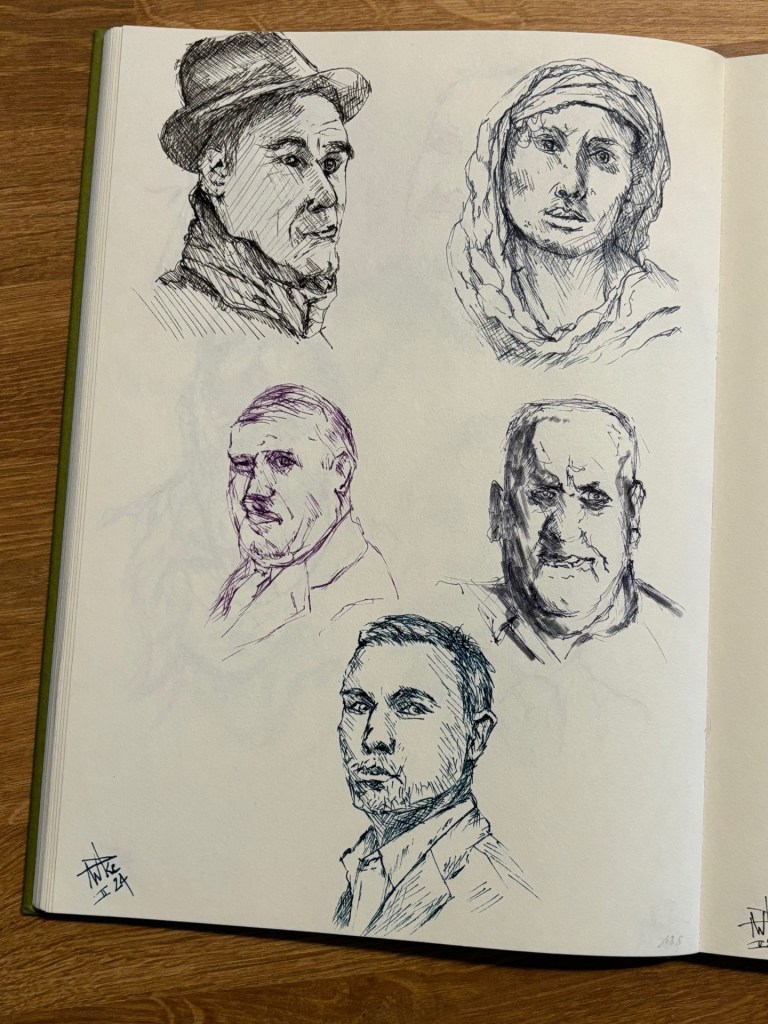
The Loomis method has always been my basis, but I had moved away from it in the sense that I no longer drew the basics, but immediately started drawing with details. Now, through a youtube video I learned that we need to approach a drawing as a sculpture. We start with a lump of clay that is gradually brought into shape. In other words, before drawing I really have to draw a basic sketch, preferably in pencil first. In loose sketching, the use of a pencil is strongly discouraged, but in this case it is a necessity.

Now it is clear that if there is to be a real resemblance to the person, then there has to be more precise drawing and that proportion has to be right. In terms of timing, this means that I now spend half an hour on one portrait, so converted to drawing three, I quickly spend two hours each day, research included. The impact of this is huge, so I really have to plan my time.

Throughout this post I have placed some pictures of my drawings. I don’t hide the bad or not so good ones, I also want to show you that the learning process is not perfect and that I try to get better step by step.

Are you also working on a challenge to learn something or to get better at something? Feel free to tell me what your findings are, tips and tricks are more than welcome.


 Peacock pens
Leave a reply to Wrap up February ’24 – Peacock pens Cancel reply